A new air conditioning installation involves more than placing equipment. Proper sizing, matched components, duct compatibility, electrical requirements, and professional commissioning determine whether the system performs as intended in Orlando's demanding climate.
Equipment sizing for air conditioner installation in Orlando requires more than a square-footage estimate. Central Florida's elevated humidity and extended cooling season demand careful evaluation of both sensible and latent cooling loads. A system that is too small will struggle to maintain comfort during peak summer heat. A system that is oversized may short-cycle, reducing its ability to dehumidify indoor air effectively — a significant concern in Orange County's subtropical environment.
Proper sizing considers the conditioned area, ceiling heights, insulation levels, window area and orientation, duct system capacity, occupancy, appliance heat gains, and local climate data. The selected indoor and outdoor equipment must be matched for refrigerant type, capacity, and metering device compatibility. Mismatched components can cause operational problems, reduce system efficiency, and shorten equipment life.
Before any new AC installation begins, we evaluate the existing duct system for leaks, sizing, insulation condition, and static pressure characteristics. Electrical panel capacity, condensate drainage routing, equipment access clearances, and thermostat compatibility are also checked. For property owners exploring our complete Orlando cooling services, this evaluation ensures the new system is set up for reliable, long-term performance rather than early failure.
Installing an air conditioning system in Orlando requires attention to factors that may not apply in cooler or drier regions. The extended cooling season means the equipment will run substantially more hours per year than systems in northern states. This makes proper installation quality — tight refrigerant connections, correct charge, proper airflow setup, and reliable condensate drainage — especially important for long-term durability.
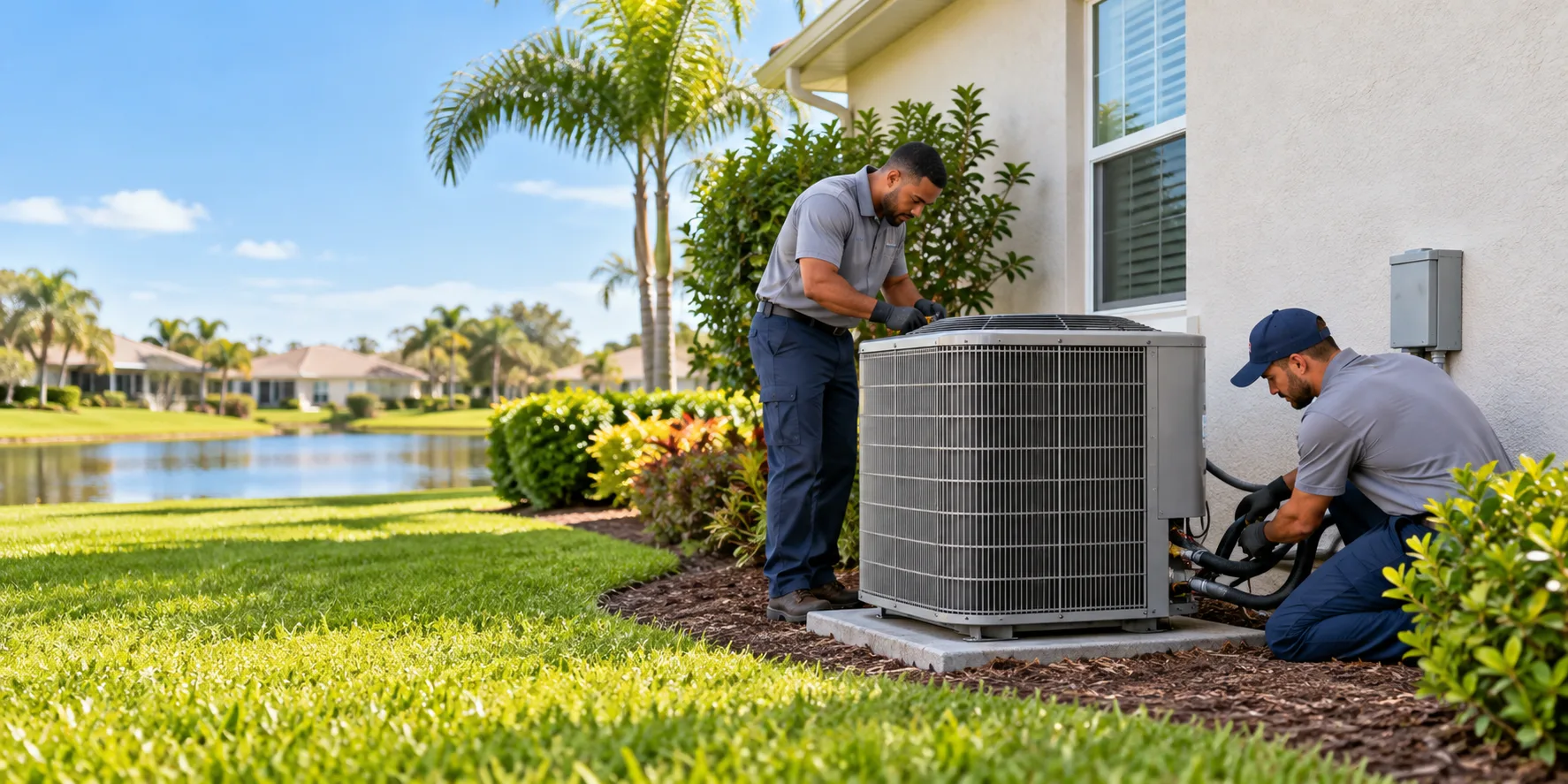
Outdoor units are exposed to direct sun, rain, humidity, and debris year-round. Equipment placement should consider adequate airflow clearance, service access, protection from direct afternoon sun where feasible, and elevation above potential flood or standing-water levels. Indoor equipment in attic installations must account for extreme summer attic temperatures that can exceed 140°F.
High latent loads require accurate sizing for dehumidification
Condensate drainage must handle heavy moisture production
Outdoor equipment placement affects heat rejection performance
Duct insulation quality directly impacts efficiency in hot attic spaces
Central split systems remain the most common air conditioning configuration in Orlando residential properties. These systems use an outdoor condensing unit connected to an indoor air handler or furnace-mounted evaporator coil through refrigerant lines. For properties that also require heating, heat pump systems provide both cooling and heating capability using the same refrigerant circuit — a practical option in Central Florida where heating demands are moderate compared to cooling requirements.
Ductless mini-split systems serve as an alternative when traditional ductwork is not available or when specific rooms need independent cooling control. For properties considering new construction or substantial renovation, the choice between ducted central systems and ductless configurations depends on the building layout, cooling zone requirements, and budget considerations. Our evaluation process covers all these equipment types to help determine which installation approach best fits the specific property and cooling needs. Related services including ductless mini-split installation and air handler replacement are also available.
Ready to discuss a new air conditioning system for your Orlando property? Contact us for a thorough pre-installation evaluation and equipment recommendation.
