The air handler contains your system's blower motor, evaporator coil, filter section, and condensate management components. When these elements deteriorate beyond practical repair, a matched replacement restores proper airflow, cooling, and moisture control.
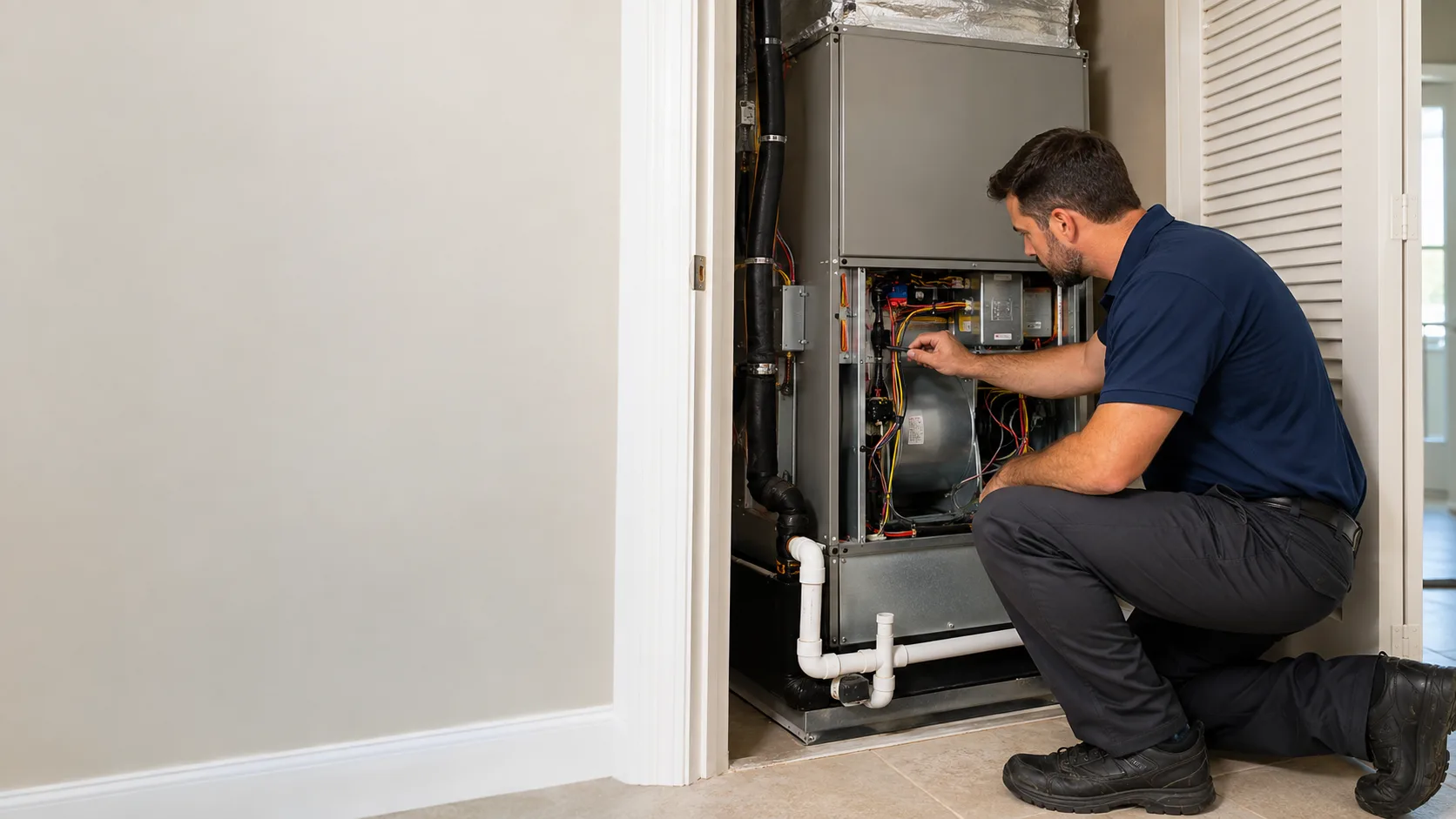
Not every air handler problem requires full unit replacement. A failing blower motor can be replaced, a clogged drain line can be cleared, and minor electrical issues can be repaired. However, there are situations where the air handler as a whole has reached a point where individual repairs are no longer practical.
Severe evaporator coil deterioration with refrigerant leaks, advanced cabinet corrosion that compromises structural integrity, drain pan cracks that cannot be reliably sealed, blower assembly problems combined with coil and cabinet issues, or matched-system requirements when the outdoor unit has been replaced — these conditions may point toward air handler replacement rather than continued piecemeal repair.
In Orlando's climate, air handlers face constant moisture exposure. Condensation runs continuously during cooling, and the warm, humid air passing over the evaporator creates conditions that accelerate corrosion, especially in older units with deteriorating drain pans. Our local air conditioning team evaluates the full picture before recommending replacement — including whether the existing outdoor unit is compatible with a new indoor unit.
A failing blower motor or deteriorated blower wheel can significantly reduce airflow from supply registers, causing uneven cooling and increased humidity indoors.
Cracked drain pans, corroded cabinets, and failed condensate management can cause persistent water problems — especially in Florida's high-condensation environment.
An evaporator coil with severe corrosion, multiple leak sites, or refrigerant loss may not justify coil-only replacement if the air handler cabinet and components are also deteriorated.
When the outdoor condensing unit has been replaced, the indoor air handler may need updating to match the new unit's refrigerant type, capacity, and metering device.
Many Orlando homes have air handlers installed in attic spaces, mechanical closets, or garages. Each location presents specific challenges for replacement. Attic-mounted air handlers in Central Florida experience extreme ambient temperatures during summer — often exceeding 140°F in uninsulated attic spaces. These conditions accelerate wear on components, increase condensation volume, and make the quality of the condensate management system critically important.
When replacing an attic-mounted air handler, the drain pan and primary and secondary condensate drain lines must be thoroughly evaluated. A failed or cracked drain pan in an attic installation can cause significant water damage to ceilings and interior walls below. Float switches provide a safety shutdown if the primary drain becomes blocked, but they must be properly installed and tested during the replacement process.
Closet installations may present clearance constraints that affect equipment selection. The replacement air handler must physically fit within the available space while maintaining adequate clearance for filter access, electrical connections, and service. Garage installations avoid extreme attic heat but may be subject to higher dust and debris exposure. Regardless of location, the replacement evaluation includes careful assessment of the installation environment and any modifications needed to accommodate the new equipment.
After a replacement air handler is physically installed and connected, the system must be commissioned to verify proper operation. This includes checking airflow volume and distribution across supply registers, confirming that the evaporator coil temperature split falls within expected ranges, testing condensate drainage under operating conditions, and verifying that the blower operates correctly at all speed settings. Proper commissioning ensures the new air handler integrates correctly with the existing outdoor equipment and duct system.
Concerned about blower performance, water leaks, coil condition, or indoor equipment matching? Contact us for a thorough air handler evaluation.
